

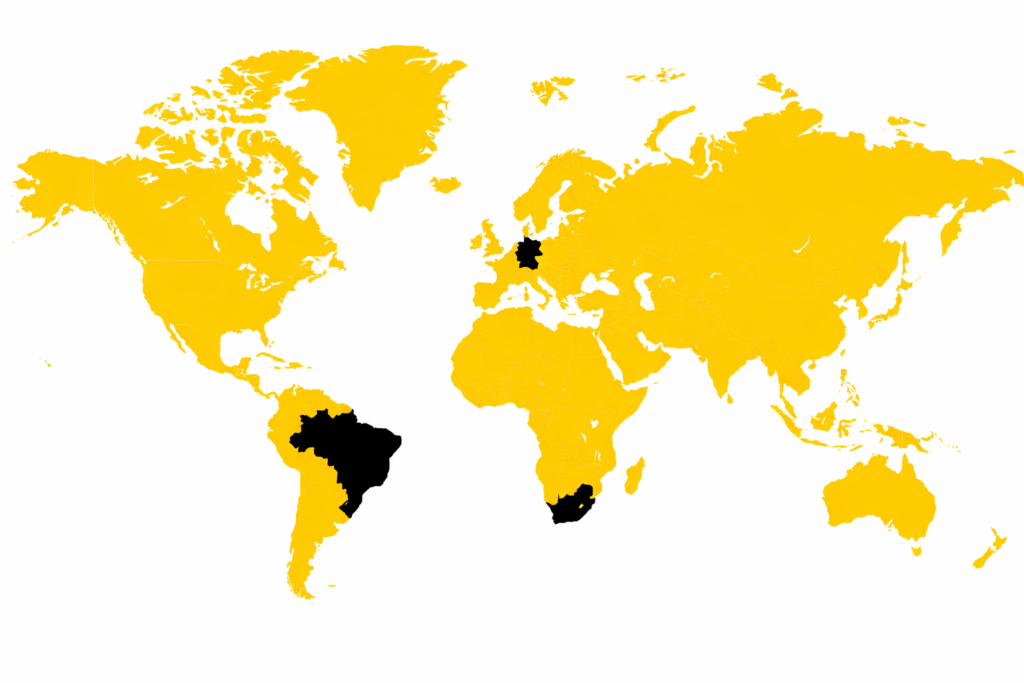
ARMIES is a comparative research project that compares how firearms shape everyday life in three countries: Germany, Brazil, and South Africa. Rather than assuming there is one single “global gun culture,” the project looks closely at how people experience and use firearms in specific local settings. By comparing these three places, the research identifies both key differences and shared patterns in how guns influence politics, economies, and social life. Germany, Brazil, and South Africa were chosen because they each have large numbers of civilian firearms, active arms industries, and lively public debates about gun ownership shaped by their histories.
In all three countries, firearms are connected to a wide range of activities and communities, from hunting and sport shooting to security and crime. In all three sites, firearms are central to social clubs, leisure activities, and local economies, and they bring together communities organized around shooting, hunting, and collecting. By studying these “communities of arms” side by side, ARMIES aims to better understand how firearms influence social relationships and public life across different parts of the world.